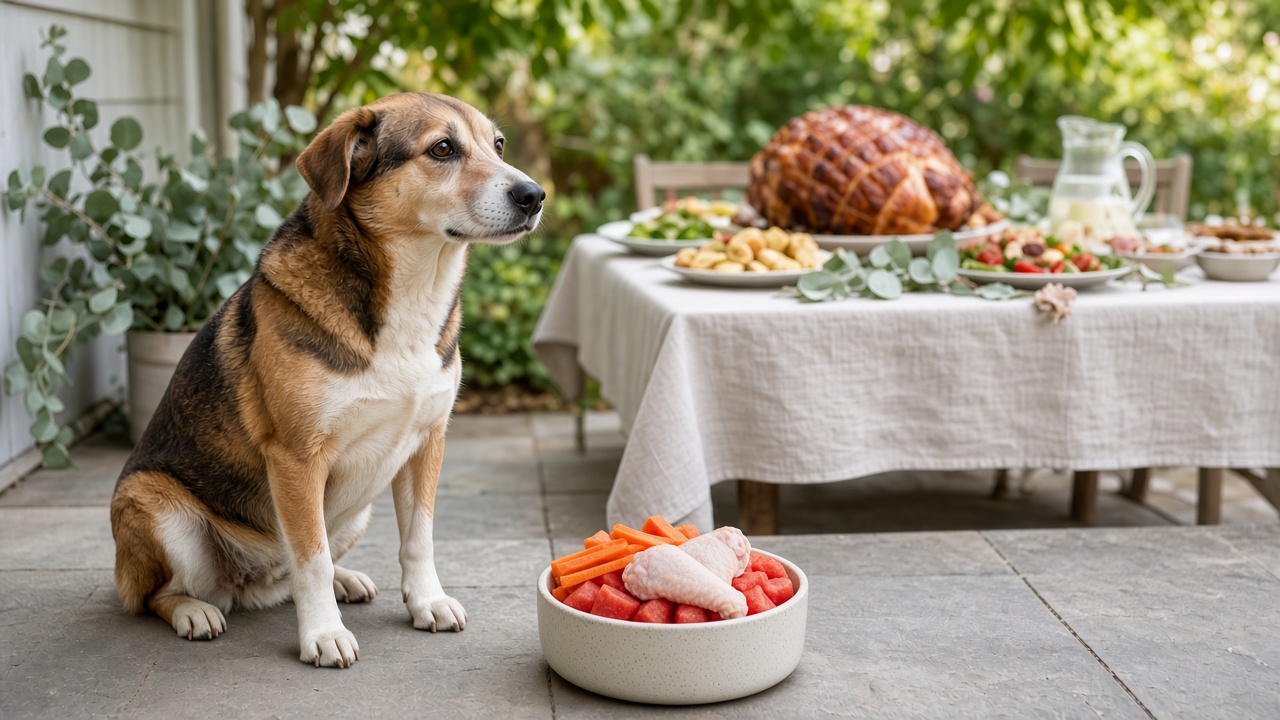
Christmas leftovers can be unsafe for dogs, even when they look like a harmless treat. The big ones to keep off the floor and out of reach are ham, ham bones and any cooked bones, rich and fatty scraps, and greasy or heavily processed treats. If your dog gets into ham or a cooked bone, watch them closely and follow the advice below. For other foods you’re unsure about, call your vet.
Why is Christmas a risky time for dogs?
An Australian Christmas is usually loud, hot and full of food. There are BBQs, long lunches, visitors who don’t know your dog’s rules, platters left on low tables, and bins that fill up fast. Many owners find the problem isn’t one big meal but lots of small “just this once” scraps from different hands over the whole holiday.
Our raw feeding guide makes a simple point that fits here: every dog is unique, and each one processes food a little differently. What one dog shrugs off may upset another. That’s why it pays to set a few house rules before the guests arrive.
Can dogs eat ham, ham bones or cooked bones?
Dogs should not be given ham at all — not the meat, the rind or the fat. The glaze on its own would be fine, but the rind and fat are not, so leftover ham has no place on your dog’s plate.
Ham bones, and any other cooked bone, are dangerous. Cooked bones can splinter and may cause a blockage. Weight-bearing cooked bones can also crack teeth. Ham bones carry all of these risks, plus the fat and salt from the meat. That covers the usual Christmas leftovers: turkey, chicken, pork ribs, lamb and beef roast bones, as well as the ham bone itself.
Our starter guide, in its bone broth method, is clear: after you strain the broth, “hard bones are not to be fed to dogs under any circumstances.”
If your dog has eaten ham or a cooked bone, watch them closely. Excessive drinking, excessive panting or constipation means you should seek vet advice. There is no real difference in this advice for puppies. Small dogs may show symptoms sooner than large dogs, simply because of their size.
Our chicken Bone Broth is different from giving a cooked bone. The pouch contains no bones. Only the liquid is used: the bones are discarded and the liquid is dehydrated.
Are raw bones different from cooked bones?
Raw bones are flexible, so dogs can chew them and digest them. Two to three raw bones a week is recommended for dogs that already eat them.
They’re still fed raw, and they need to be the right size and shape for your pet. Our starter guide lists consumable raw bones such as turkey necks, wings and feet, chicken necks and frames, lamb necks and ribs, and beef necks and tails. Weight-bearing raw bones aren’t fully consumable and should be thrown out after 24 hours.
So, if your dog is raw fed, keep giving their usual raw bones as normal. If they aren’t, Christmas Day is not the time to start with leftovers from the carving board. As one of our favourite myth-busters puts it, just chopping up some steak or giving a bone is not raw feeding.
Are fatty leftovers like crackling and gravy OK for dogs?
Rich, fatty scraps are best kept for the humans. As a general rule, our starter guide doesn’t recommend higher-fat foods for puppies under 12 months or for active dogs, and it suggests a low-fat diet for older dogs and less active dogs. Christmas trimmings like pork crackling, roast drippings and creamy sauces are about as far from that as food gets.
Fat also adds up quickly when lots of people are slipping a bit off their plate, so it helps to agree on one rule for the whole family.
The guide also notes that dogs with pancreatic problems have special requirements, and that owners of these dogs should work with a professional. If your dog has had pancreatic problems before, or you’re worried after a fatty feast, talk to your vet. Don’t rely on Google or Facebook for this one.
What about BBQ meat, sausages and seasoned food?
Seasoned meat, marinades and rubs are made for the human table. When our guide talks about dried meat treats for dogs, it recommends pieces that haven’t been dried using salt and don’t feel greasy. Sausages and well-seasoned BBQ meat don’t fit that description.
If you’d like your dog to join in at the BBQ, set aside a plain, unseasoned piece of their usual protein before anything goes on the grill.
Are macadamias, chocolate and other festive treats safe for dogs?
Keep macadamias, chocolate, grapes and raisins, and anything with xylitol or alcohol well away from your dog this Christmas. If you think they’ve had any of these, call your vet.
Macadamias. These nuts are popular at Australian Christmas parties, and they can be unsafe for dogs. Keep bowls of mixed nuts, and baking that contains them, out of reach.
Chocolate. Chocolate is unsafe for dogs, and darker chocolate and baking chocolate are the greater concern. Keep gift boxes, brownies and dessert platters off low tables.
Grapes and raisins. These are unsafe for dogs, including in fruit cake, Christmas pudding and mince pies. Don’t share these from the table.
Onion and garlic. Onion, often found in stuffing, gravy and leftover veg, should be kept off your dog’s plate. Garlic in small quantities is fine, but garlic in rich stuffing and gravy is still a caution, so those dishes are best kept for the humans.
Xylitol. This sweetener, sometimes listed as birch sugar, can appear in sugar-free gum, mints, some peanut butters and baked goods. It is unsafe for dogs, so check labels and call your vet if you think your dog has had some.
Alcohol. Dogs shouldn’t have any. Don’t leave glasses or leftover punch where they can reach them.
Corn cobs. Don’t give your dog a corn cob to chew. If a cob is swallowed, it may cause a blockage, so seek vet advice.
Are rawhide chews and store-bought treats good Christmas presents?
It’s tempting to fill a stocking with chews from the supermarket, but our guide is cautious about them. Rawhides are meant to break down into small soft pieces over time. The trouble is that the pieces that break off can be a major choking hazard, and they may cause intestinal blockages that build up over time.
The guide also notes that many manufactured pet treats are made in a similar way to kibble and contain preservatives, colours and flavours. Its comparison is a good one: giving your pet a manufactured treat is a bit like giving a child a handful of lollies.
If you buy treats, read the label the same way you’d read a dog food label, and do your own research before you hand over something new.
What can my dog enjoy instead at Christmas?
There’s plenty your dog can enjoy without raiding the platters. The treats our guide suggests are simple:
- carrots
- apples, minus the core
- dried meat pieces that haven’t been dried using salt and don’t feel greasy
The plant options listed in the guide also include summery fruit such as watermelon, blueberries, strawberries and mango, plus cucumber. Offer small amounts, and remember that fresh and raw is best.
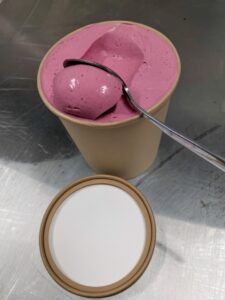
On hot days, many owners like to make frozen treats ahead of time. Frozen bone broth cubes are an easy one to keep in the freezer for the holidays. We’ve covered how to make them in our guide to frozen treats for dogs.
Should I change my dog’s food over the holidays?
Go easy with anything new. Our guide explains that if a dog vomits or has the runs when you introduce a new protein, it may simply not be used to breaking that protein down yet. Its advice is to add new proteins in alongside a food your dog already knows.
So the holidays are a good time to stick to your dog’s usual routine, and to save big changes for a quieter week. If your dog has an upset stomach that doesn’t settle, call your vet.
How do I keep my dog safe when guests visit?
A little planning goes a long way:
- Ask guests not to feed your dog, and give the kids a bowl of dog-friendly treats to hand out instead.
- Keep platters and plates off low tables and away from the edge of the bench.
- Put bones and scraps straight into a bin with a lid your dog can’t open.
- Give your dog a quiet spot away from the crowd, with their own water and a chew or treat they already know.
- Save your vet’s number, and your nearest after-hours emergency vet, in your phone before the holidays start.
What should I do if my dog eats something it shouldn’t?
If it was ham or a cooked bone, watch them closely. Seek vet advice if you notice excessive drinking, excessive panting or constipation.
For anything else you’re unsure about, call your vet, or an after-hours emergency vet if your clinic is closed. Have the packaging or a description of the food handy, along with roughly how much your dog ate and when. Don’t try home remedies from social media. As our guide says, if you’re not sure, contact a professional.
FAQ
Can dogs eat ham or ham bones at Christmas?
No. Don’t give ham at all — not the meat, the rind or the fat. Ham bones and any other cooked bone are dangerous: they can splinter, may cause a blockage, and weight-bearing bones can crack teeth. If your dog has already had some, watch them closely and seek vet advice if they drink or pant excessively, or become constipated.
Can I give my dog a little crackling or gravy as a Christmas treat?
It’s best not to. Our guide doesn’t recommend higher-fat foods for puppies or active dogs, and suggests a low-fat diet for older and less active dogs. If your dog has had pancreatic problems, talk to your vet before offering anything rich.
Are rawhide chews safe for dogs?
Our guide is cautious about rawhide. Pieces that break off can be a choking hazard and may cause intestinal blockages.
What Christmas treats can I give my dog instead?
Carrots, apples minus the core, unsalted dried meat that doesn’t feel greasy, and small amounts of summer fruit like watermelon and blueberries. Frozen bone broth cubes are a good option on hot days.
My dog ate something off the table. What should I do?
If it was ham or a cooked bone, watch them closely and seek vet advice if you notice excessive drinking, excessive panting or constipation. For anything else you’re unsure about, call your vet or an after-hours emergency vet, and have the packaging or a description of the food ready.
Related reading: Can dogs eat frozen yoghurt and other frozen treats?