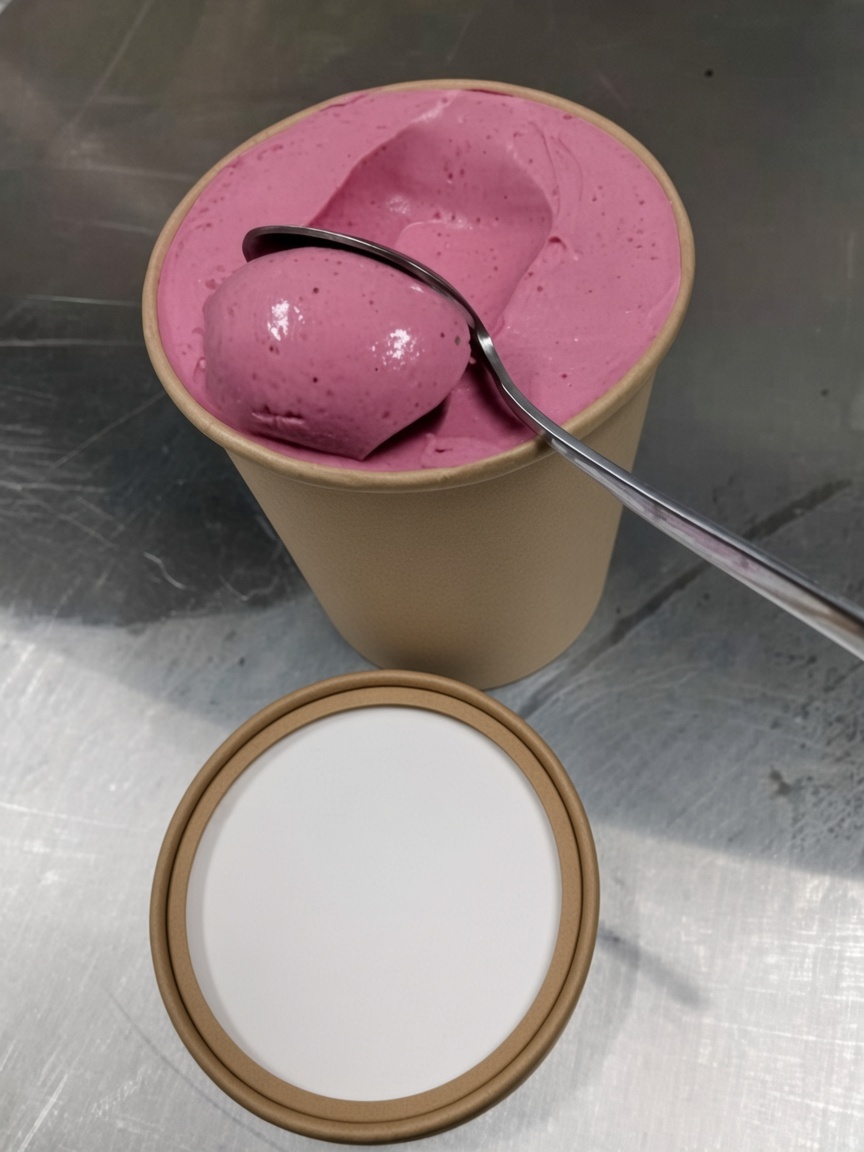
Yes, many dogs can enjoy a frozen treat on a hot day, as long as it’s made from simple, dog-friendly ingredients. Plain, natural yoghurt, homemade bone broth and pieces of fresh fruit are all easy to freeze at home. Human frozen yoghurt and ice cream are made for people, so check the label and keep portions small.
Is frozen yoghurt OK for dogs?
Yoghurt appears in our raw food starter guide in a couple of places. It’s listed with kefir and goat’s milk among the foods owners can rotate into a raw diet, and kefir is listed again as one of the guide’s added extras. So a little plain yoghurt can fit into many dogs’ diets.
The key word is plain. If you’re buying yoghurt to freeze for your dog, choose a plain, natural yoghurt, and read the ingredient list the same way you’d read a dog food label. Skip flavoured dessert tubs, and check that the ingredients don’t include xylitol, chocolate or other unsafe extras.
Every dog is different. If your dog has a sensitive stomach, or you’re not sure dairy suits them, start with a very small amount or talk to your vet first.
Can dogs eat human frozen yoghurt or ice cream?
It’s best to keep the human versions for the humans. Desserts made for people are flavoured and sweetened for our taste, not your dog’s. Our guide makes the same point about manufactured pet treats: many contain preservatives, colours and flavours, and giving them is a bit like handing a child a handful of lollies.
If you’d like to share the summer dessert moment, make your dog their own version at home where you control what goes in.
How do you make frozen yoghurt treats for dogs?
Here are two simple recipes you can make at home: a frozen yoghurt, and a water-based ice block if you’d rather skip dairy. These are a treat that may also offer health benefits.
Frozen yoghurt
Ingredients
- 500g plain coconut yoghurt or kefir-based yoghurt. Choose one with no added sugar, and check the label for xylitol, chocolate or other unsafe extras.
- 3 tablespoons Power Paw powder.
Method
- Stir the Power Paw into the yoghurt until smooth.
- Spoon into ice cube trays or silicone moulds.
- Freeze until firm.
Serving. About 50g for a small dog, and about 100g for a large dog. That’s no hard and fast rule, and it’s hard to overdo.
Water-based ice blocks
A simple dairy-free option.
Ingredients
- 500ml water
- 3 tablespoons Power Paw powder.
Method
- Stir the Power Paw into the water until mixed.
- Pour into ice cube trays or silicone moulds.
- Freeze until firm.
Serving. About 50g for a small dog, and about 100g for a large dog. That’s no hard and fast rule, and it’s hard to overdo.
Both the yoghurt treats and the ice blocks keep for up to 3 months in the freezer, if they last that long.
What other frozen treats can dogs have?
Bone broth is one of the easiest frozen treats to keep on hand, and it’s covered step by step in our starter guide.
How to make bone broth for freezing
- Buy enough bones to fill your slow cooker or pressure cooker. Chicken feet, fish heads, marrow bones, beef neck bones, chicken necks and any bones with joints all work well.
- Put the bones in the cooker and add 4 tablespoons of apple cider vinegar.
- Cover the bones with water, up to the maximum fill line.
- Cook. In a slow cooker, cook on low for 24 hours for soft bones or 36 hours for hard bones. In a pressure cooker, cook on high for 2 hours for soft bones or 4 hours for hard bones.
- Strain and remove the bones. Hard bones are not to be fed to dogs under any circumstances.
- Put the broth in the fridge to set. Depending on the protein, this can take up to 2 days. If it doesn’t set, it can still be fed.
- Scrape off the fat layer and throw it away.
Homemade broth keeps for about a week in the fridge. Most people, especially with smaller dogs, won’t get through a batch in a week, so the guide suggests freezing it in ice cube trays or moulds to use later. That’s your frozen treat sorted.
The guide adds that soft bones, such as chicken feet or chicken necks, can be blended into a thick paste after cooking and set in the fridge or frozen in ice cube trays, then fed as an extra.
Frozen fruit pieces
The plant options listed in our guide include plenty of summer fruit: watermelon, mango, blueberries, strawberries, raspberries, blackberries, banana, pineapple and kiwi fruit. Apples are on the list too. Cucumber is another option. Small pieces can go straight into the freezer for a cold, crunchy snack.
A little prep keeps these treats safer. Apples: no seeds, as they contain compounds that release cyanide. Remove the seed from mango, leave out the watermelon rind and seeds, and peel the banana. Offer a few pieces at a time.
How much bone broth can I give my dog?
There’s no hard and fast rule, but our guide gives this as a daily guide:
- Small dogs and cats: 1/8 cup
- Medium dogs: 1/4 cup
- Large dogs: 1/3 to 1/2 cup
- Giant dogs: 1 to 2 cups
If your dog isn’t keen, the guide suggests mixing it into their meat or warming it up like a soup. Many dogs love beef or chicken broth, while fish can be an acquired taste. Frozen cubes can count towards the daily amount.
Does frozen bone broth replace raw bones?
No. Our guide is clear that bone broth doesn’t replace the bone content of a raw diet. Raw-fed dogs still need their bones, both for their teeth and gums and for the nutrients bones provide. Think of frozen broth cubes as an extra, not a swap.
What we use
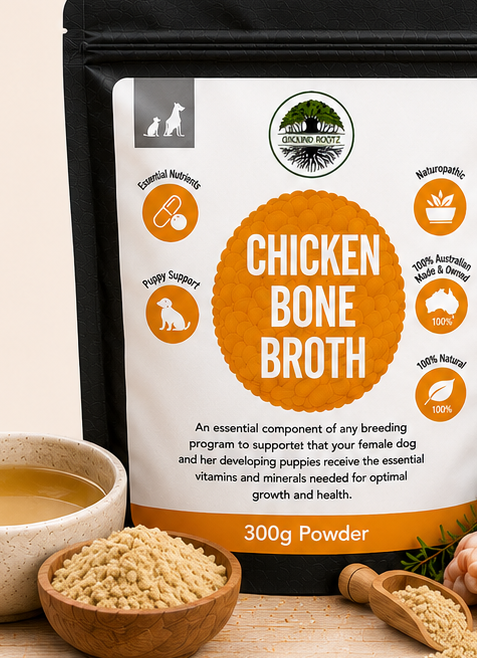
Ground Rootz Bone Broth comes in a pouch. Mix as directed, then freeze in ice cube trays.
What we use: Ground Rootz Bone Broth
Prefer not to run the slow cooker for 24 hours in the middle of summer? Our Bone Broth is a dehydrated bone broth made with chicken bones, water and apple cider vinegar, and it comes in a pouch.
Bone broth is known for its collagen and amino acids, and may help support joint health, gut health and a healthy skin and coat for pets.
The pouch contains no bones. Only the liquid is used: the bones are discarded and the liquid is dehydrated, so these cubes are not the same as giving a cooked bone.
The product page says to mix 1 tablespoon of the powder with 200ml of water, and to serve 30ml per 10kg of body weight with meals daily. It can be served warm or cold, so the mixed broth can go into ice cube trays and into the freezer. Count frozen cubes as part of that daily serve.
Bone Broth: https://groundrootz.com/product/bone-broth/
Any tips for giving frozen treats in summer?
- Freeze in small portions. Ice cube trays and silicone moulds make it easy to give one or two at a time.
- Give frozen treats somewhere easy to clean, like the back step or a towel on the floor.
- If you have more than one dog, give treats in separate spots so nobody guards or gulps.
- Count treats as part of the day’s food, not on top of it.
- Frozen treats are a nice extra on a hot day, but they’re not a substitute for shade and fresh water. If your dog seems unwell in the heat, call your vet.
FAQ
Can dogs eat frozen yoghurt?
Many dogs can have a little plain, natural yoghurt, frozen or not. Skip flavoured human frozen yoghurt and ice cream, and talk to your vet if you’re not sure dairy suits your dog.
Is bone broth good to freeze for dogs?
Yes. Our starter guide suggests freezing homemade bone broth in ice cube trays or moulds, as a batch keeps for about a week in the fridge.
What fruit can I freeze for my dog?
Our guide’s plant options include watermelon, mango, blueberries, strawberries, raspberries, banana, pineapple, kiwi fruit and apple. Apples: no seeds, as they contain compounds that release cyanide. Remove the mango seed, watermelon rind and seeds, and banana skin. Freeze small pieces and offer a few at a time.
Can frozen treats replace my dog’s raw bones?
No. Bone broth and frozen treats are extras. Raw-fed dogs still need their raw bones.
Related reading: What foods should dogs not eat at Christmas?